
Trinidad and Tobago
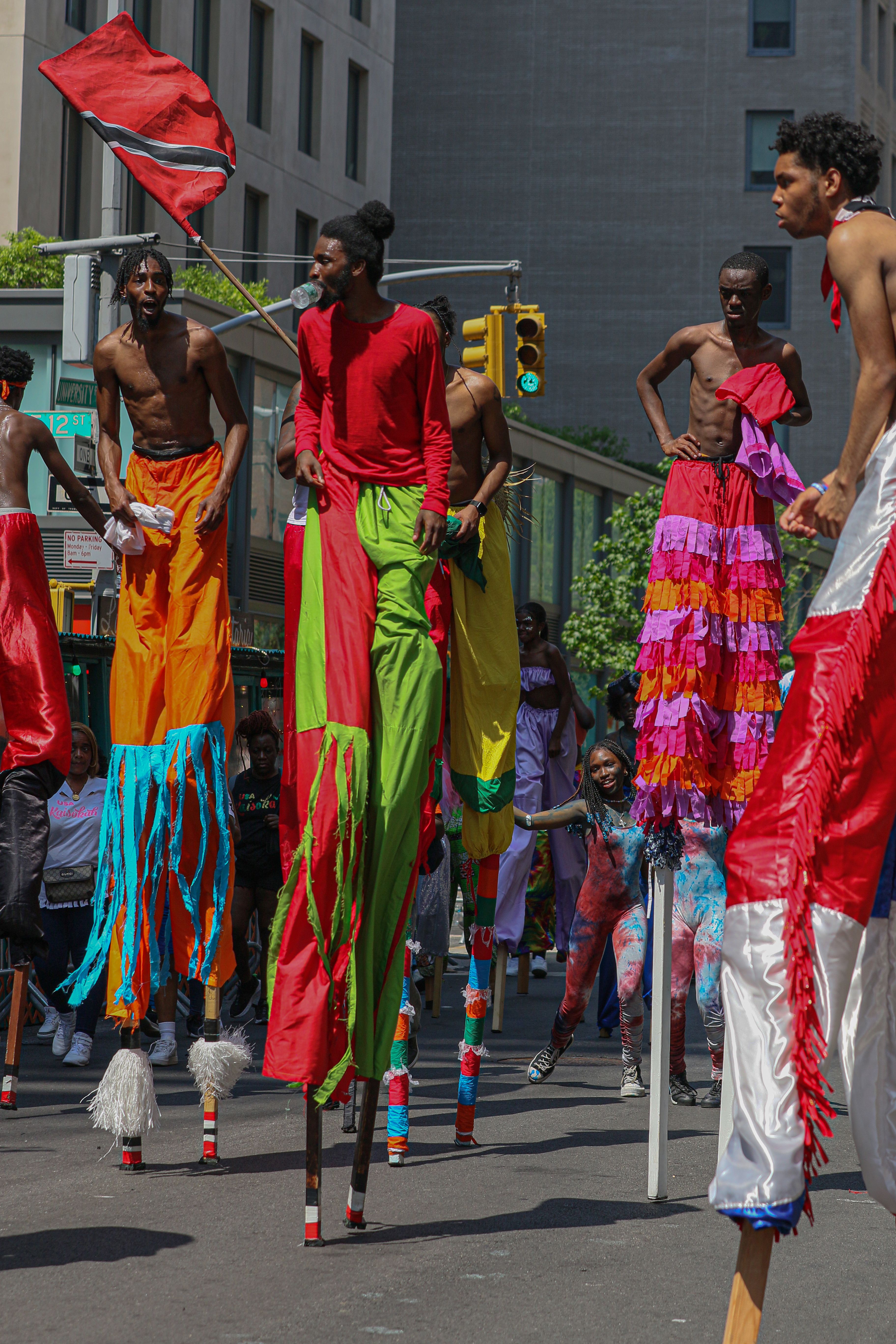
Moko Jumbie: The Stilt-Walking Spirits Watching Over Carnival

TiketCaribbean Team
June 22, 2026
6 min read
Moko Jumbie: The Stilt-Walking Spirits Watching Over Carnival
Look up before you look around. That is the trick with Moko Jumbies. While most of Carnival happens at eye level, the Moko Jumbie tradition happens above the crowd, on stilts that can stand ten feet or more off the ground.
The name itself tells the story. "Moko" comes from Central African languages and refers to a healer. "Jumbie" is a West Indian word for a spirit, thought to trace back to the Kongo word zumbi. Put together, a Moko Jumbie is something between a protector and a ghost, watching over the people below.
Where the tradition comes from
Moko Jumbies arrived in the Caribbean with enslaved Africans, brought over from West and Central African stilt-dancing traditions where similar figures were believed to ward off evil and bring good fortune. The earliest documented appearance in the Caribbean dates to 1791 in St Thomas, in what is now the US Virgin Islands. From there, the practice spread across Anguilla, Antigua and Barbuda, Barbados, St Kitts and Nevis, and Trinidad and Tobago, where masqueraders on stilts would visit homes at Christmas, New Year, and Whitsun.
Because enslavers deliberately mixed people from different regions and language groups to make organising resistance harder, the exact West African lineage of Moko Jumbie cannot be traced to one single source. What survived instead is the practice itself, carried forward and adapted island by island.
More than a costume
A Moko Jumbie is not just someone on stilts. The costume blends African and European elements, often with a mask, and the height itself carries meaning. Towering above the crowd, the performer becomes something closer to an ancestral spirit than a character, a living link to a heritage that crossed the Atlantic under conditions built to erase it.
Traditional mas has lost ground to modern band Carnival over the decades, but Moko Jumbies have held their place. They remain a fixture in Trinidad's traditional mas competitions and cultural showcases, and troupes teaching the skill, including to young girls and women, have kept the practice alive in the diaspora as well as at home.
The next time a Moko Jumbie passes overhead on the road, remember what is actually happening. That is one of the oldest surviving threads in Caribbean Carnival, still standing, still walking, still watching.
Have you ever seen a Moko Jumbie up close, or tried to walk on stilts yourself?Sources
Wikipedia (2026) Moko jumbie. Available at: https://en.wikipedia.org/wiki/Moko_jumbie (Accessed: 10 July 2026).
Strangers' Guide (2023) The Moko Jumbies of Trinidad and Tobago's Carnival. Available at: https://strangersguide.com/articles/stilt-walkers-moko-jumbies/ (Accessed: 10 July 2026).
Essence (2023) How Moko Jumbies, and the girls and women embodying them, keep African traditions alive in the Caribbean. Available at: https://www.essence.com/lifestyle/moko-jumbies/ (Accessed: 10 July 2026).