
Caribbean
Before Sunrise, We Free Ourselves: The Meaning of J'ouvert

TiketCaribbean Team
January 27, 2026
7 min read
Before Sunrise, We Free Ourselves: The Meaning of J'ouvert
If Carnival has a heartbeat, J'ouvert is the moment it wakes up.
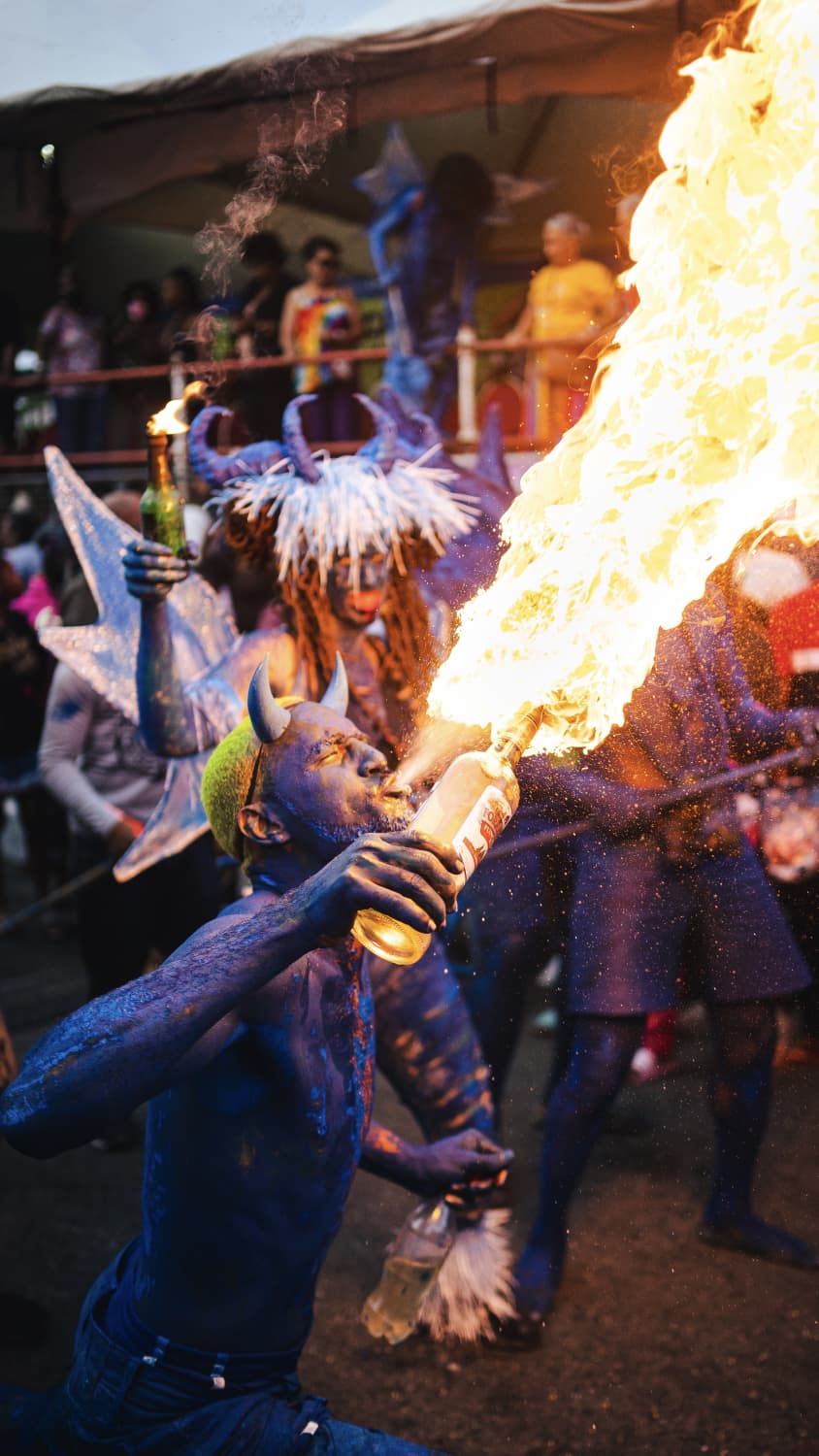
Long before the trucks roll and costumes hit the road, people are already in the streets. Covered in mud, paint, powder, oil, chocolate, or whatever the band decide this year. No makeup. No pretence. Just bodies, rhythm, and release. That is J'ouvert.
The word comes from the French jour ouvert - "daybreak". But in Trinidad and across the Caribbean, J'ouvert is more than a start time. It's a reminder of where Carnival really comes from.
J'ouvert traces back to the emancipation period of the 1800s, when formerly enslaved Africans took to the streets to celebrate freedom in their own way. These early masquerades were loud, raw, and deliberately unruly. They mocked plantation owners, flipped social roles, and reclaimed space that was once denied. Authorities tried to control it. The people kept it moving.
That spirit never left.
Today, J'ouvert still belongs to the people. No sequins. No VIP ropes. Just the road. The music is heavier. The bass hits deeper. The laughter comes easier. You see old friends, new faces, and somebody you swear you haven't seen since secondary school.
In the diaspora - London, New York, Toronto - J'ouvert has taken on new layers. Permits, policing, and curfews have changed how it looks, but not how it feels. For many Caribbean people abroad, J'ouvert is the closest thing to home. A reminder that culture can cross oceans and still show up before dawn.
What makes J'ouvert special is not the mess. It's the meaning. It's the freedom to look however you look. To dance however you move. To exist without explanation.
By the time the sun comes up, something inside you has already shifted. And that's the point..
Sources
Hill, E. (1972) The Trinidad Carnival: Mandate for a National Theatre. Austin: University of Texas Press.
Liverpool, H. (2001) Rituals of Power and Rebellion: The Carnival Tradition in Trinidad and Tobago. Chicago: Research Associates School Times Publications.
Nurse, K. (1999) 'Globalization and Trinidad Carnival: Diaspora, Hybridity and Identity', Cultural Studies, 13(4), pp. 661–690.