Bahamas
Junkanoo: The Bahamas' Boxing Day Tradition of Resistance and Rhythm

TiketCaribbean Team
July 5, 2026
6 min read
Junkanoo: The Bahamas' Boxing Day Tradition of Resistance and Rhythm
At three in the morning on Boxing Day, Bay Street in Nassau fills with cowbells, whistles, and goatskin drums, and it does not stop until the sun is well up.
Junkanoo traces its roots to West Africa, with possible ties to the Akan, Igbo, or Yoruba peoples, and its Bahamian history to the days when enslaved people were given only a few days off a year, typically around Christmas. On those rare free days, people built their own celebration, one that doubled as a public display of African identity and, quietly, a form of protest.
Costumes built from what was available
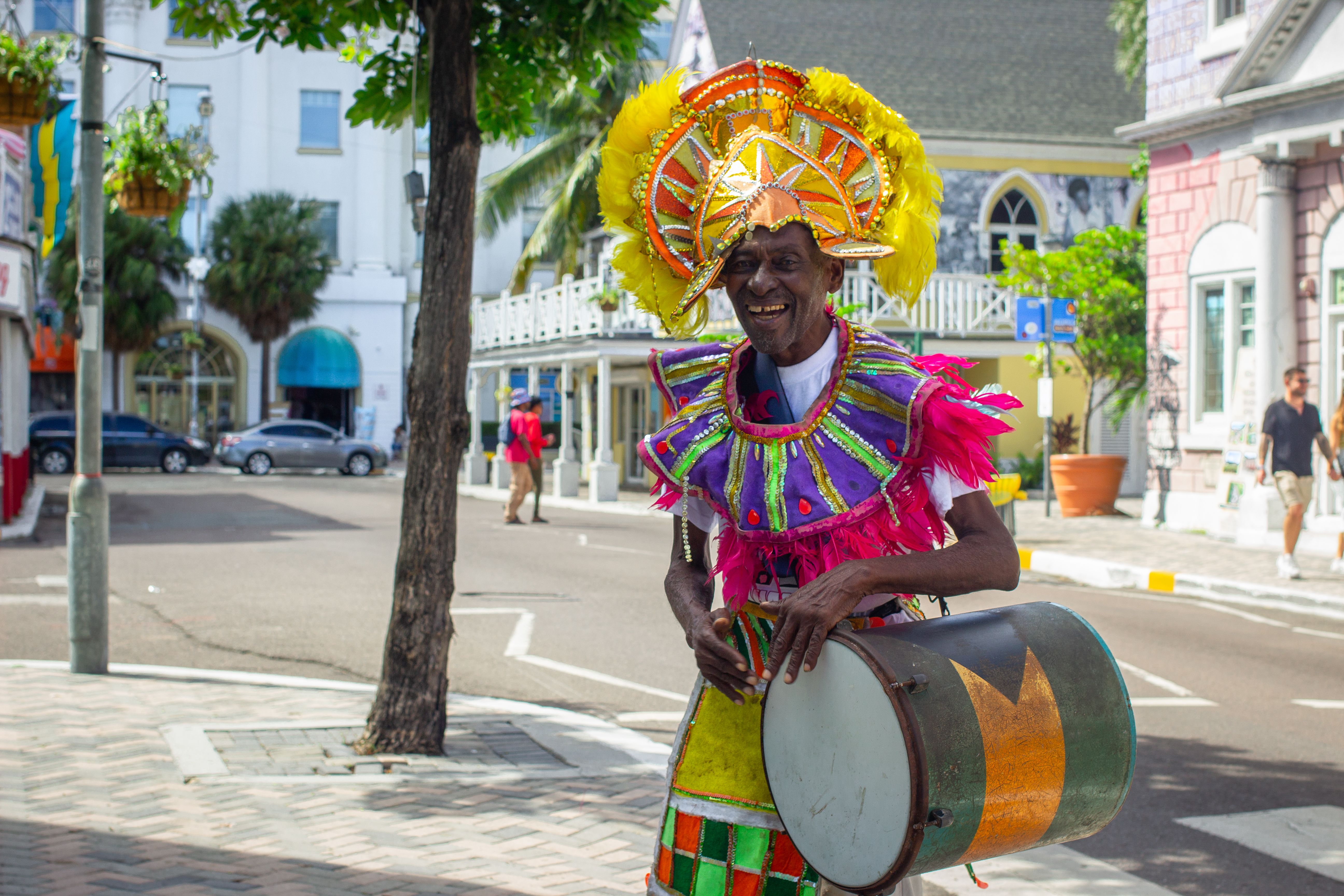
Original Junkanoo costumes were made from whatever materials were on hand, sponges, newspaper, and other discarded items, reflecting both economic necessity and resourcefulness. Today's costumes have evolved into elaborate creations built from crepe paper and cardboard, but the spirit of making something spectacular out of what is available has carried through.
A tradition that was pushed, then pulled back
Junkanoo has not had a straight, uninterrupted history. In 1938, the celebration was moved specifically to Boxing Day, away from Christmas morning, after religious leaders objected to it. By 1948, tourism promoters pushed to bring Junkanoo back to Bay Street, and a newly formed Citizens Masquerade Committee began regulating the parade, in part to manage concerns from colonial authorities about "disorderly" conduct. In other words, a tradition born as an assertion of freedom spent decades being negotiated, restricted, and reshaped by the same kinds of authorities it originally pushed back against.
What Junkanoo looks like now
Modern Junkanoo happens twice a year, on Boxing Day and New Year's Day, with organised groups "rushing" down Bay Street in costume, competing for prizes judged on music, costume, and overall presentation. Family Islands across the Bahamas hold their own versions too, scaled to their communities but carrying the same energy.
What makes Junkanoo worth understanding is not just the spectacle. It is the fact that a celebration built out of a handful of stolen hours off has become one of the defining cultural exports of the Bahamas, still loud, still unapologetic, still happening at three in the morning because that is when it always has.
Have you ever caught Junkanoo in Nassau, or only seen it in clips?Sources
TIME (2024) What to Know About the History of Junkanoo. Available at: https://time.com/7202192/junkanoo-holiday-history/ (Accessed: 10 July 2026).
Wikipedia (2026) Junkanoo. Available at: https://en.wikipedia.org/wiki/Junkanoo (Accessed: 10 July 2026).
Government of The Bahamas (2026) Junkanoo - A Cultural Celebration of The Bahamas. Available at: https://www.bahamas.gov.bs/junkanoo (Accessed: 10 July 2026).