
Trinidad and Tobago
The Blue Devils of Paramin: A Tradition Only One Village Owns

TiketCaribbean Team
July 7, 2026
6 min read
The Blue Devils of Paramin: A Tradition Only One Village Owns
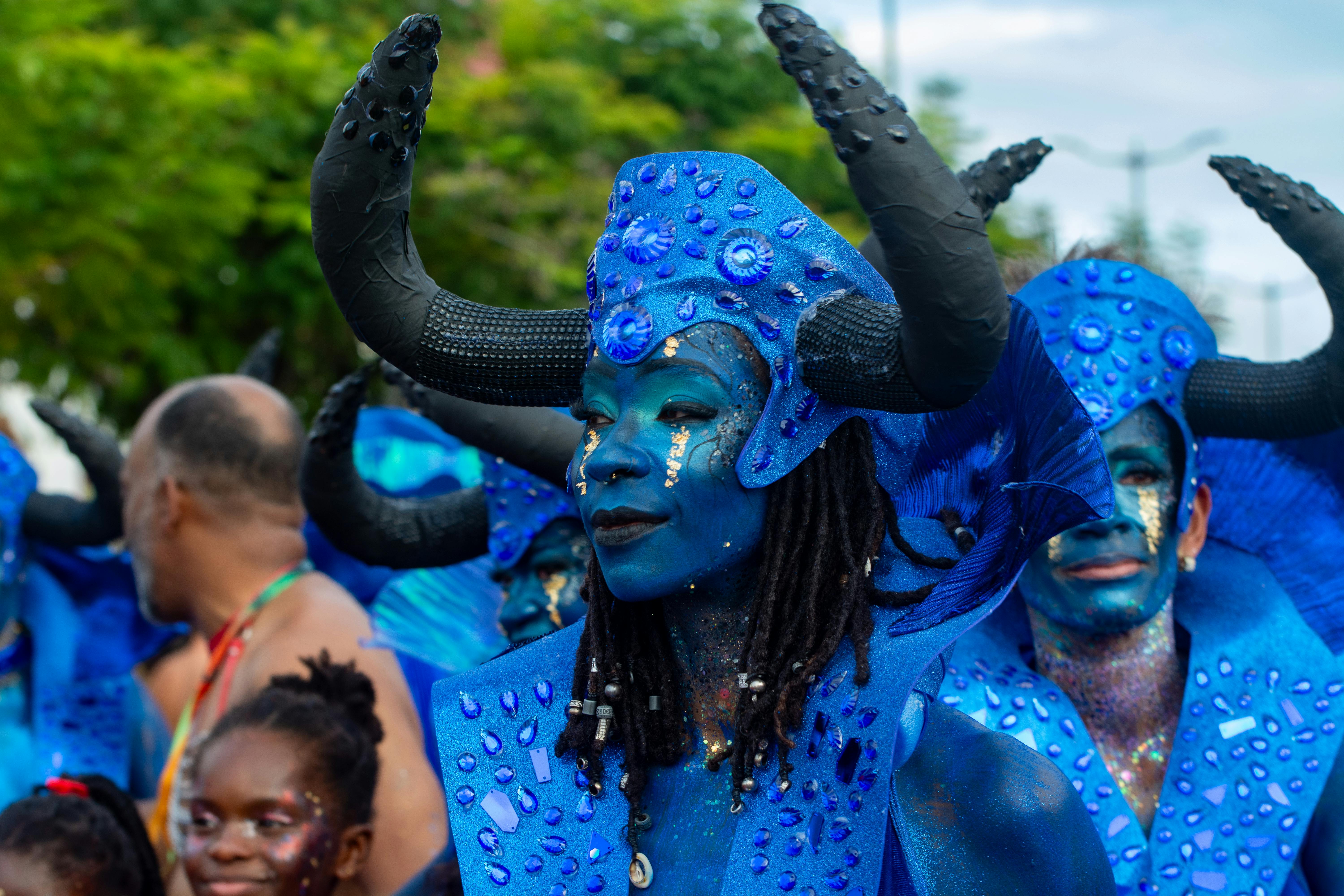
Every Carnival Monday night, the hills above Maraval turn into something closer to a fire ritual than a party. Paramin's Blue Devils breathe flame, scream in unison, and chase anyone who will not "pay de devil," and no other community in Trinidad and Tobago, or anywhere else, performs this exact tradition.
Where the blue came from
Blue Devils are a branch of the wider Jab Molassie or devil mas tradition, which stretches back to the 1800s as a way formerly enslaved people mocked the violence of plantation slavery by performing it back at their enslavers. Most communities used molasses, since sugarcane processing was the industry most enslaved Africans in Trinidad were forced into.
Paramin never had sugarcane fields. According to reporting from the Trinidad Guardian and the community history documented by Ins and Outs of Trinidad and Tobago, Paramin residents used blue washing powder mixed into their paint instead, since it was what was actually available in the hills. That single substitution, born out of local circumstance rather than design, is what makes Paramin's devils visually distinct from every other devil mas troupe on the island.
A tradition run by the village itself
Paramin operates less like a costume tradition and more like a living mas camp. Retired jabs, now elders, continue actively training each new generation of devils, and the community treats the practice as something inherited and protected rather than performed for an audience. Children, adults, and the elderly are all part of it, at different stages of the same continuous line.
On the night itself, the devils breathe fire, taunt onlookers with a beat played on biscuit tins, and threaten, mostly in fun, to leave a smear of blue paint on anyone who does not "pay de devil" a dollar or two.
Why it has stayed local
Unlike Moko Jumbies or Midnight Robbers, which have spread across the Caribbean diaspora, the Blue Devils of Paramin have largely stayed exactly where they started. Part of that is geography. The tradition is tied to a specific hillside community and the families who have run it for generations. Part of it is intent. This was never built to travel. It was built to be Paramin's.
Have you ever made the trip up to Paramin on Carnival Monday night?Sources
Trinidad Guardian (2020s) The Blue Devil: Keeping traditional Carnival characters alive. Available at: https://www.guardian.co.tt/news/the-blue-devil-keeping-traditional-carnival-characters-alive-6.2.1035292.d2c7241683 (Accessed: 10 July 2026).
Ins and Outs of Trinidad and Tobago (2026) The Blue Diables of Paramin. Available at: https://www.insandoutstt.com/articles/the-blue-diables-of-paramin (Accessed: 10 July 2026).
Trinidad and Tobago Newsday (2020) Making a mas: Demystifying the blue devil. Available at: https://newsday.co.tt/2020/01/31/making-a-mas-demystifying-the-blue-devil/ (Accessed: 10 July 2026).